

🔧 Newly Uploaded TSBs – April & May 2025
Stay ahead of the curve with the latest Technical Service Bulletins (TSBs) added in the past two months.
-
170 brand-new TSBs
-
188 updates to existing bulletins
Each case is based on real support calls from one of Europe’s largest aftermarket hotline centers. These bulletins target everyday workshop frustrations — helping technicians save time, diagnose smarter, and increase workshop efficiency.
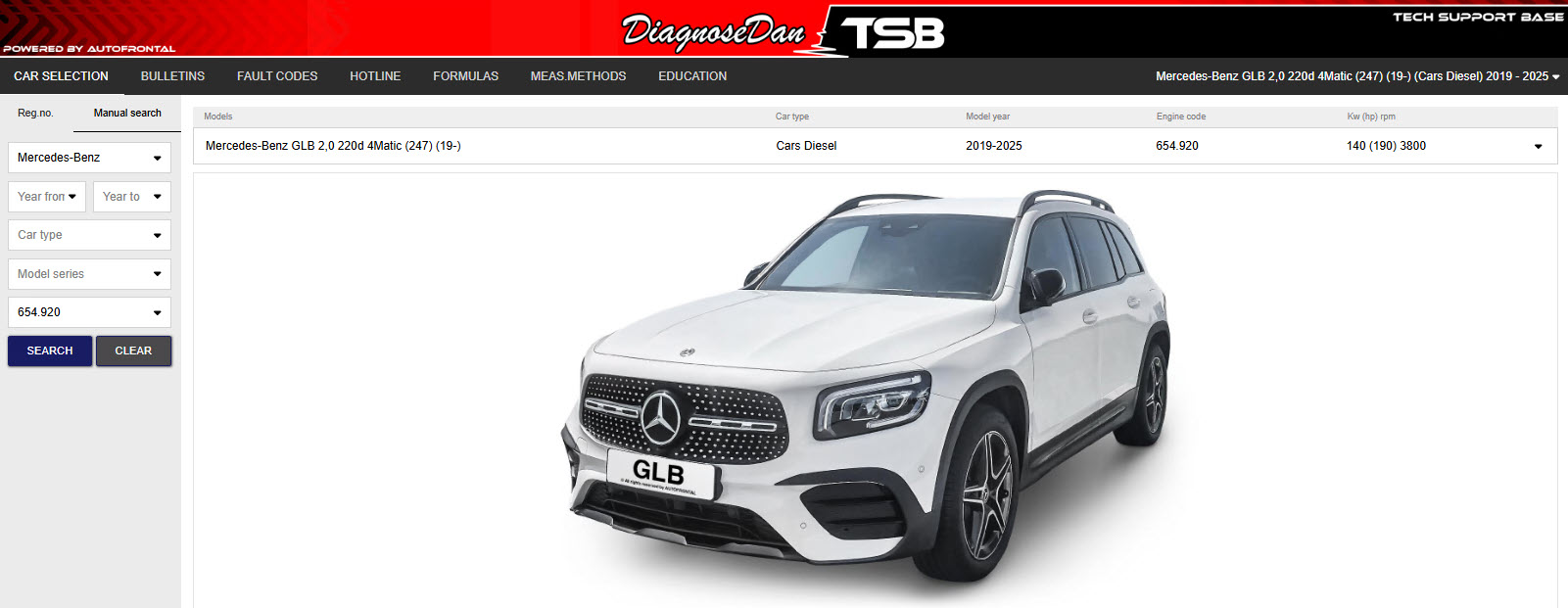
🚗 Example 1: Mercedes-Benz GLB (X247) 2019 → 2.0D (OM654.920)
Transmission Jumps to Neutral — Fault Code P061B00
🛠️ Real Issue. Real Fix. No Guesswork.
Symptoms:
Transmission unexpectedly shifts into neutral
Normal function resumes after restarting the engine
Fault codes stored:
B1F4500 – Starter battery has excessive resistance
B21059A – Starter battery capacity too low
P061B00 – Torque calculation malfunction in the control unit
🤔 What Does P061B00 Really Mean?
This fault code may suggest a control unit failure or communication error — but that’s misleading. It offers no clear direction and often leads technicians down the wrong diagnostic path.
📌 The Real Culprit: The 12V Battery
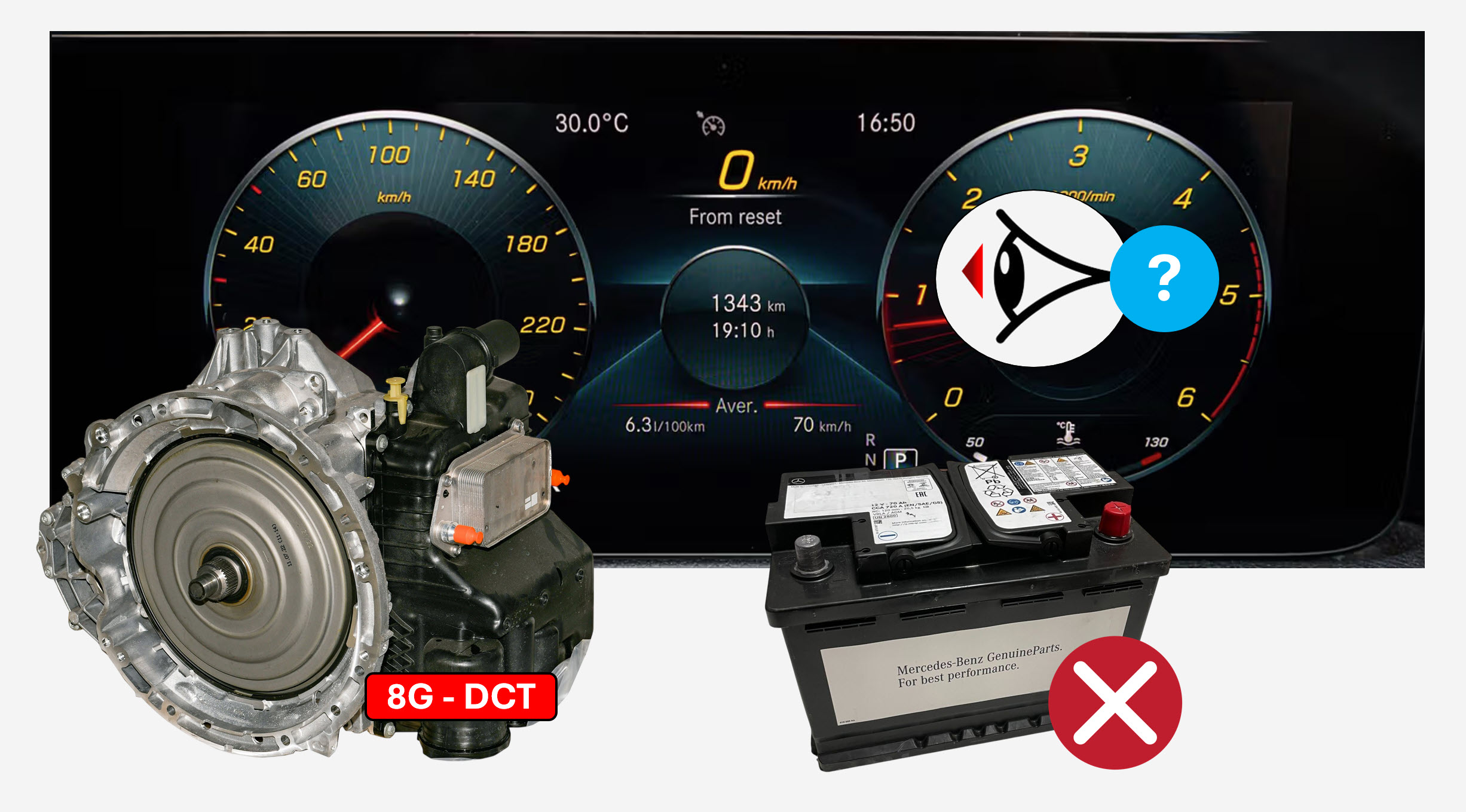
As one of Europe’s largest hotline centers, we maintain a huge database of real-world cases. After reviewing multiple reports on the GLB with 8G-DCT/DKG transmission (code 426), a consistent root cause appeared:
A weak or deteriorated 12V battery — even if it seems fine at rest.
These batteries often drop voltage under load, confusing the control unit and triggering logic faults like P061B00.
🔄 What Happens in Practice
Transmission drops into neutral — often while driving
After a restart, normal drive resumes
Additional fault codes may include:
P056300 – System voltage too low
B210D97, B21059A, B1F4500 – Battery-related
In 50% of cases, there’s no visible warning — making this easy to misdiagnose.
✅ Confirmed Fix
Replace the 12V battery with a properly rated unit
Perform coding/adaptation if required (especially for AGM/start-stop systems)
Clear codes and verify stable transmission performance
🧠 Diagnostic Insight
Technicians may suspect a faulty ECU or start testing harnesses — but the real fix is simple:
🔋 Voltage stability is critical in modern diagnostics — even when the fault doesn’t appear electrical.
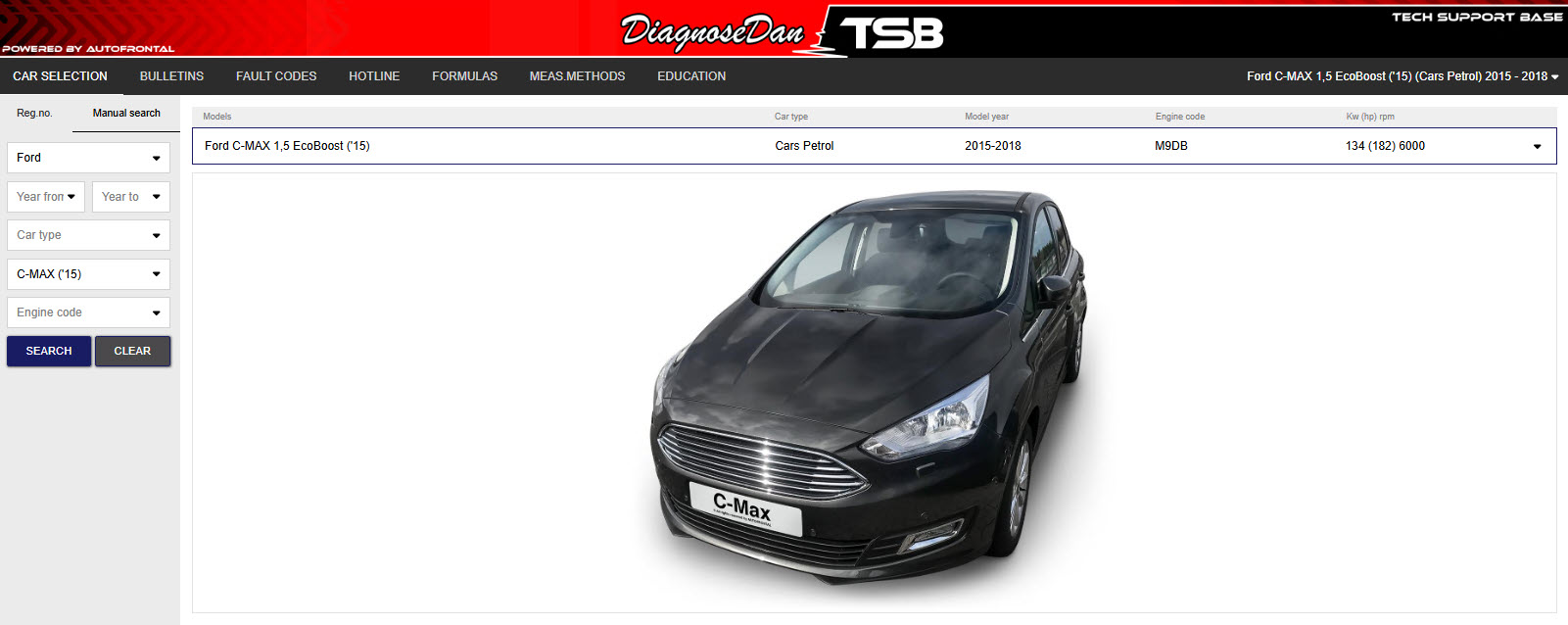
🚗 Example 2: Ford 2015 → 1.5 EcoBoost
Starter Spins, But Engine Doesn’t Start
🛠️ Real Case. Real Fix. Direct from the Field.
🔍 Step 1 — Initial Fault Codes
-
P0222 – Throttle/Pedal Position Sensor Switch B Circuit Low
-
P2101 – Throttle Actuator Control Motor Circuit Range/Performance
These codes point toward throttle system components — the pedal or actuator. But can these fault codes prevent the engine from starting?
⚡ Step 2 — Quick Test: Unplug Both Components
The technician unplugged both the throttle actuator and the throttle pedal to rule out internal shorts.
Result: No start. Voltage still too low. The issue had to lie elsewhere.
🔧 Step 3 — Check Power, Ground, Signal
-
Ground: Passed (verified using an incandescent test lamp)
-
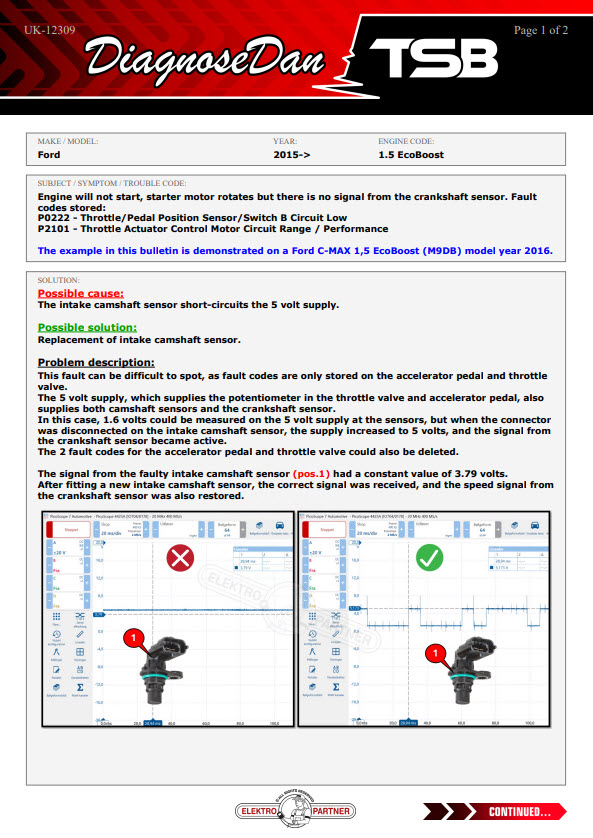
5V Supply: Only 3.79V — far too low
⚠️ Too low to be healthy — something’s pulling it down.
📉 Step 4 — Wiring Diagrams Didn’t Help
-
Autodata: No shared 5V info
-
OEM diagrams: Also unclear
-
➤ Manual testing was the only way forward
🧪 Step 5 — Sensor-by-Sensor Elimination
The technician unplugged each sensor one by one, monitoring the 5V reference line:
-
Camshaft sensors
-
Crankshaft sensor
-
MAP sensor
-
Throttle pedal
Breakthrough: Unplugging the intake camshaft sensor restored the line to a solid 5.00V.
✅ Fault confirmed: the sensor was shorting the 5V reference.
🔚 Step 6 — Final Resolution
-
Replaced the faulty intake camshaft sensor
-
Verified the 5V line stayed stable
-
Engine started successfully
-
Wiring visually inspected for damage
🧠 Key Takeaway
When wiring diagrams fall short, real-time diagnostics and structured testing lead to the solution.
This is exactly the kind of insight you’ll find in DDTSB.
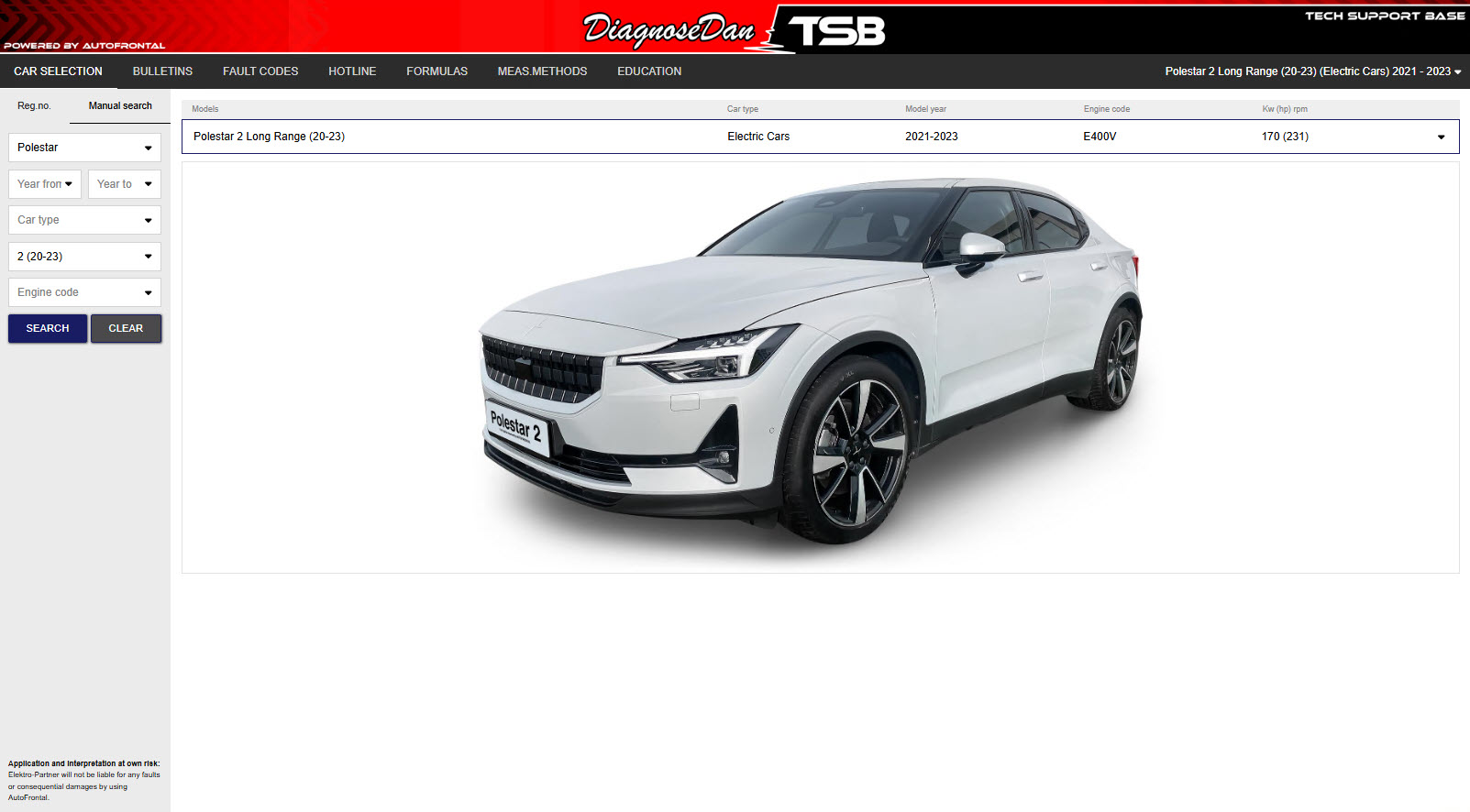
⚡ Example 3: Polestar 2 (2020 →) – Full EV
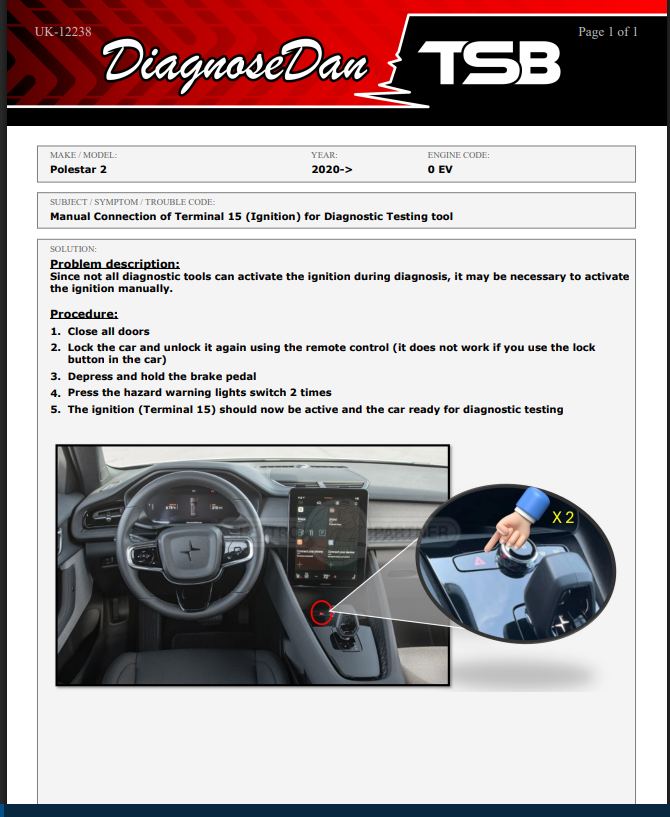
Manual Ignition Activation – What Most Workshops Miss
🔧 Problem: No Ignition = No Communication
You’re trying to exit service mode after brake repair using an aftermarket scan tool. You connect the tool, but the ignition won’t activate. No communication. You’re stuck.
❓ Why It Happens
OEM tools activate ignition automatically
Aftermarket scan tools do not
OEM manuals don’t mention this, because their own tools handle it in the background
🔍 One of the most common Hotline issues for Polestar 2.
✅ The Fix — Available in DDTSB
DDTSB provides the manual ignition activation procedure — something not documented elsewhere.
Find it by:
Selecting Maintenance or Test/Diagnostic category
Searching for “ignition” or “service mode”
What seems like a complex issue becomes a 60-second fix when you have the right data.
🧠 Practical Insight
This isn’t about technician skill — it’s about having the right procedure.
🧠 Know the trick, and the job gets done.
❌ Miss it, and you’re stuck.
🚀 Maximize Your Workshop’s Potential with DDTSB
Gain access to:
Thousands of exclusive aftermarket TSBs
Real-world fixes from one of Europe’s largest hotline centers
Faster diagnostics, smarter repairs, and higher profitability